Albania
 Argentina
 Australia
 Austria
 Belgium
 Bosnia and Herzegovina
 Brazil
 Bulgaria
 Canada
 Chile
 Colombia
 Croatia
 Czech Republic
 Denmark
 Estonia
 Finland
 France
 Germany
 Greece
 Hungary
 Ireland
 Italy
 Latvia
 Lithuania
 Luxembourg
 Mexico
 Moldova
 Montenegro
 Netherlands
 New Zealand
 North Macedonia
 Norway
 Philippines
 Poland
 Portugal
 Romania
 Serbia
 Slovakia
 Slovenia
 South Africa
 Spain
 Sweden
 Switzerland
 Turkey
 Ukraine
 United Kingdom
 United States of America


Wireless In-Ear Systems
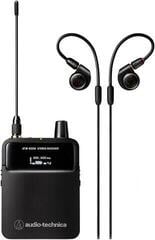
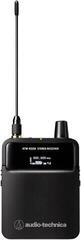
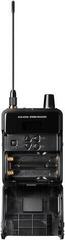
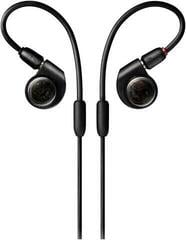
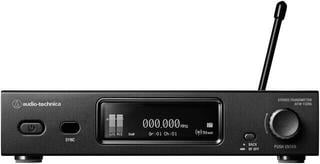
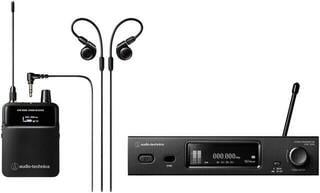
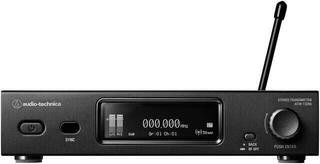
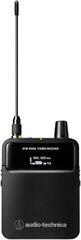
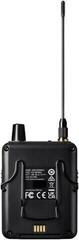
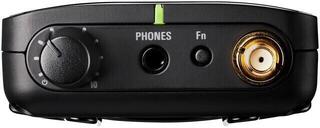
Wireless in-ear monitoring sends a personal monitor mix from the mixing console to a receiver worn on your body and then to earphones. It gives you freedom to move on stage without a long headphone cable and lets you hear your mix away from a fixed position. A set contains a transmitter, bodypack receiver and, depending on the package, earphones; the console, RF environment and correct choice of ear tips also affect the result. Choose according to the permitted band, number of musicians, mono or stereo operation and power method.
How the signal reaches your ears
The console creates a separate monitor mix and sends it from a line output to the transmitter. The transmitter sends the signal by radio to the bodypack receiver, which drives the earphones. Each stage needs the correct level to avoid clipping or unnecessary noise. Receiver volume cannot compensate for a poor balance of instruments on the monitor bus.
One transmission path may be enough for one musician. If several members hear the same mix, compatible receivers may share one transmitter where the system allows. A separate mix for each person requires corresponding outputs and transmission paths. Check the capabilities of both the system and console before buying more receivers.
| Mode | When to use it | Limitation |
|---|---|---|
| Mono | You need a simple personal mix or two independent mono paths where supported | No stereo positioning; routing must be checked |
| Stereo | You want to spread instruments across the image for a more natural sense of space | Uses two audio paths and requires correct connection |
| Focus or a similar mix mode | You adjust the balance of two groups on the receiver, such as yourself and the band | Names and behaviour differ between systems |
| Wired personal monitoring | You sit or stand in one place | Less freedom of movement, but no radio transmission |
Frequency band and coordination
Whether a particular version can be used depends on national regulations. Check the permitted band and local conditions before ordering and before every event. Wireless microphones, instrument systems, intercom and in-ear monitoring on the same stage must all be coordinated together. A channel found clear in an empty rehearsal room may not be clear at the concert venue.
Position transmitters with suitable antennas and do not crowd them thoughtlessly beside other RF equipment. Shared antenna distribution may help with several units, but must be compatible and correctly designed. Scan with the rest of the equipment switched on. Then walk the route you will use and monitor reception.
Mono, stereo and your own mix
What the musician actually needs to hear
Stereo can separate instruments spatially and improve clarity without continually raising the volume. Vocals may stay in the centre while guitars or keyboards are spread to the sides. Extreme positioning can be distracting, however, and losing one earphone side removes part of the information. Mix the most important elements so the monitor remains useful in an unexpected situation.
Send musicians only what they need for rhythm, pitch and communication. Too many channels make the mix cluttered. Ambient microphones can restore a sense of the room and audience, but must not cause feedback or enter the main PA accidentally. Set talkback so instructions are clear and predictable.
Earphones and seal
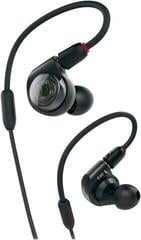
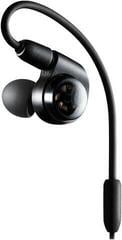
The right tip size keeps the earphone in place and forms a seal. Without it, bass falls away, stage sound leaks in and you may turn the volume up. Try several sizes and materials, using different sizes on the left and right if necessary. Route the cable where it will not catch on clothing or an instrument.
- Dynamic and multi-driver designs may have different characters; driver count alone does not determine suitability.
- A detachable cable simplifies servicing, but its connector must be mechanically reliable.
- Universal tips come in different sizes; custom-moulded designs require an individual fitting process.
- Clean earphones and tips regularly as instructed, and do not share them without hygienic treatment.
Set volume from the bottom up
An in-ear system can reduce the need for loud stage wedges, but does not protect hearing by itself. The receiver can produce a high level directly at the ear. Start at low volume, use a limiter if available and increase the level only after balancing the mix. Sudden peaks may occur while connecting equipment, when a microphone falls or through incorrect routing.
Do not remove one earphone simply to hear the room; this often leads you to turn up the other side. Adjust the seal or monitor mix, or add ambient sound safely instead. Stop listening and rest your ears if you experience unpleasant pressure, ringing or fatigue. You control the volume, but the whole crew must support a safe working procedure.
Power and physical use
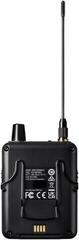
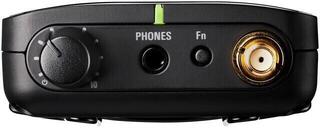
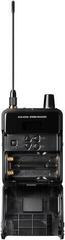
Secure the bodypack receiver where it will not hinder playing or fall during movement. Check its clip, battery door and earphone socket. Leave slight cable slack and route it under clothing or along the body without sharp bends. Fit charged rechargeable cells or fresh batteries before the performance and prepare a labelled spare.
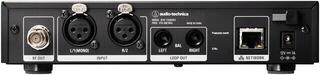
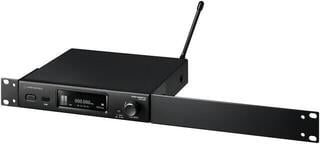
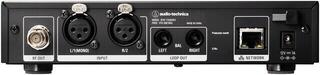
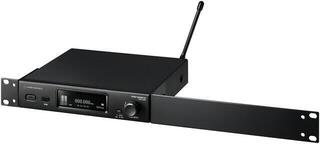
Power the transmitter from a stable source and connect its inputs with the level turned down. Keep rack cabling orderly and protect antenna connectors. Cases and accessories for audio equipment sized for the setup are useful in transit. Recheck every connection after transport.
Wireless in-ears or a stage monitor
An active floor monitor is audible to people nearby, requires no personal receiver and does not put earphones in the musician's ears. It may increase stage volume and feedback risk. Active stage monitors and wedges suit fixed positions, shared mixes or players who dislike in-ear monitoring. A wireless system is better suited to movement and a personal mix.
Soundcheck before the concert
- Prepare the monitor bus and confirm it is not routed to the main mix by mistake.
- Set levels from the console through the transmitter to the receiver without clipping.
- Coordinate frequencies with every wireless system.
- Test the earphones, seal, limiter and backup power.
- Walk the stage with all equipment on and practise communication with the engineer.
Fine-tune monitoring with the whole band; a balance prepared during a solo check changes once drums, guitars and vocals join. Decide how many separate mixes you need before choosing transmitters and receivers. Otherwise, you may have enough receivers but too few outputs or transmission paths.